

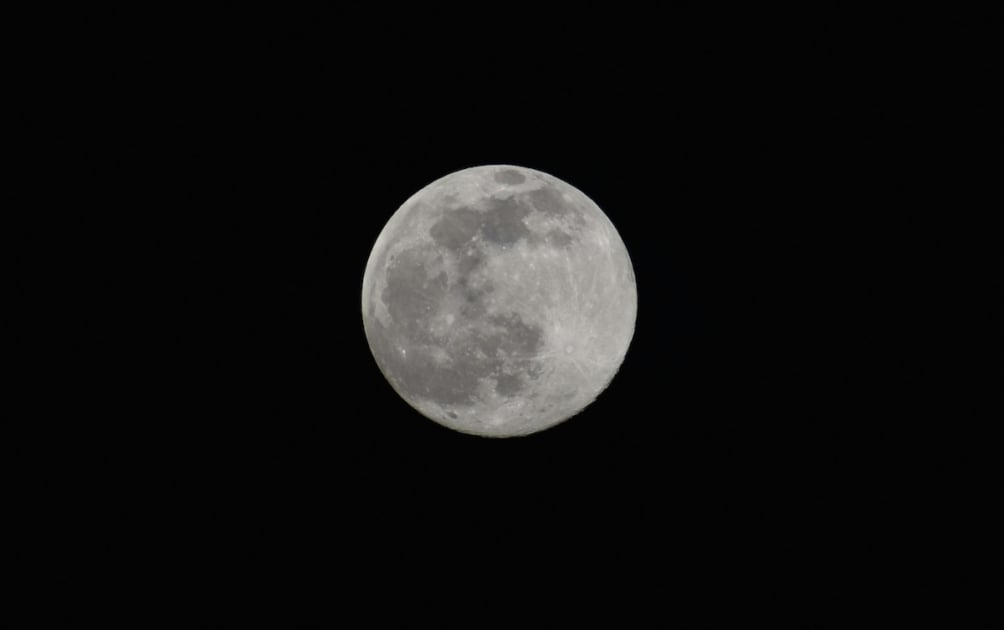
Quick Reference: Full Moons
- Next full Moon: Full Harvest Moon on September 26, 2026, at 12:49 p.m. EDT (named because it is the full Moon closest to the autumnal equinox, traditionally providing extra evening moonlight during the fall harvest).
- Next full Moon after that: Full Hunter’s Moon on October 26, 2026, at 12:12 a.m. EDT (traditionally named for the time of year when hunters prepared for the coming winter).
- Average lunar cycle: 29.5 days; the full Moon arrives roughly 15 days after the new Moon
- Times listed below: Eastern Standard or Eastern Daylight Time, depending on the date
- Total full Moons in 2026: 13 (because May has two)
The next full Moon is the Full Harvest Moon on September 26, 2026, at 12:49 p.m. EDT. The Harvest Moon is the full Moon that occurs closest to the autumnal equinox, which falls on September 22 in 2026. Its name comes from the days before electric lighting, when the bright Moon rising soon after sunset provided farmers with extra evening light to bring in their fall crops. The full Moon following the Harvest Moon will be the Full Hunter’s Moon in October.
| Full Moon Date | Native American Name | ET | CT | MT | PT | AKT | HT |
|---|---|---|---|---|---|---|---|
| January 3 | Wolf Moon | 5:03 AM EST | 4:03 AM CST | 3:03 AM MST | 2:03 AM PST | 1:03 AM AKST | 11:03 PM* HST |
| February 1 | Snow Moon | 5:09 PM EST | 4:09 PM CST | 3:09 PM MST | 2:09 PM PST | 1:09 PM AKST | 11:09 AM HST |
| March 3 | Worm Moon | 6:38 AM EST | 5:38 AM CST | 4:38 AM MST | 3:38 AM PST | 2:38 AM AKST | 12:38 AM HST |
| April 1 | Pink Moon | 10:12 PM EDT | 9:12 PM CDT | 8:12 PM MDT | 7:12 PM PDT | 6:12 PM AKDT | 4:12 PM HST |
| May 1 | Flower Moon | 1:23 PM EDT | 12:23 PM CDT | 11:23 AM MDT | 10:23 AM PDT | 9:23 AM AKDT | 7:23 AM HST |
| May 31 | Blue Moon | 4:45 AM EDT | 3:45 AM CDT | 2:45 AM MDT | 1:45 AM PDT | 12:45 AM AKDT | 10:45 PM* HST |
| June 29 | Strawberry Moon | 7:57 PM EDT | 6:57 PM CDT | 5:57 PM MDT | 4:57 PM PDT | 3:57 PM AKDT | 1:57 PM HST |
| July 29 | Buck Moon | 10:36 AM EDT | 9:36 AM CDT | 8:36 AM MDT | 7:36 AM PDT | 6:36 AM AKDT | 4:36 AM HST |
| August 28 | Sturgeon Moon | 12:18 AM EDT | 11:18 PM* CDT | 10:18 PM* MDT | 9:18 PM* PDT | 8:18 PM* AKDT | 6:18 PM* HST |
| September 26 | Harvest Moon | 12:49 PM EDT | 11:49 AM CDT | 10:49 AM MDT | 9:49 AM PDT | 8:49 AM AKDT | 6:49 AM HST |
| October 26 | Hunter’s Moon | 12:12 AM EDT | 11:12 PM* CDT | 10:12 PM* MDT | 9:12 PM* PDT | 8:12 PM* AKDT | 6:12 PM* HST |
| November 24 | Beaver Moon | 9:53 AM EST | 8:53 AM CST | 7:53 AM MST | 6:53 AM PST | 5:53 AM AKST | 3:53 AM HST |
| December 23 | Cold Moon | 8:28 PM EST | 7:28 PM CST | 6:28 PM MST | 5:28 PM PST | 4:28 PM AKST | 2:28 PM HST |
* Previous calendar day. ET = Eastern; CT = Central; MT = Mountain; PT = Pacific; AKT = Alaska; HT = Hawaii (no DST). DST in effect Apr 1–Oct 31, 2026.

Buy Your 2026 Almanac – free shipping! Already a member? Sign-in to your account.
Note: Times listed are Eastern Standard (or Eastern Daylight when appropriate).

New Moon
Looking Back: 2025 Full Moons
2025 closed with three supermoons in a row in October, November, and December. The third, the Full Cold Moon, occurred on December 4, 2025 at 6:16 p.m. Eastern Standard Time (3:16 a.m. PST). Below is the full 2025 calendar for reference, plus a closer look at that December Cold Moon.
What Is a Full Moon?
A full Moon is the phase when the Moon appears to be fully illuminated from Earth’s perspective.
This occurs when the Sun, Earth, and Moon are all in alignment, forming a straight line. The Moon and the Sun are on exact opposite sides of the Earth. From this position, the Sun’s light shines directly onto the portion of the Moon that is visible to us and creates a full, bright circle of light. Astronomers call this geometry “syzygy,” and the moment of opposition is when peak illumination occurs.
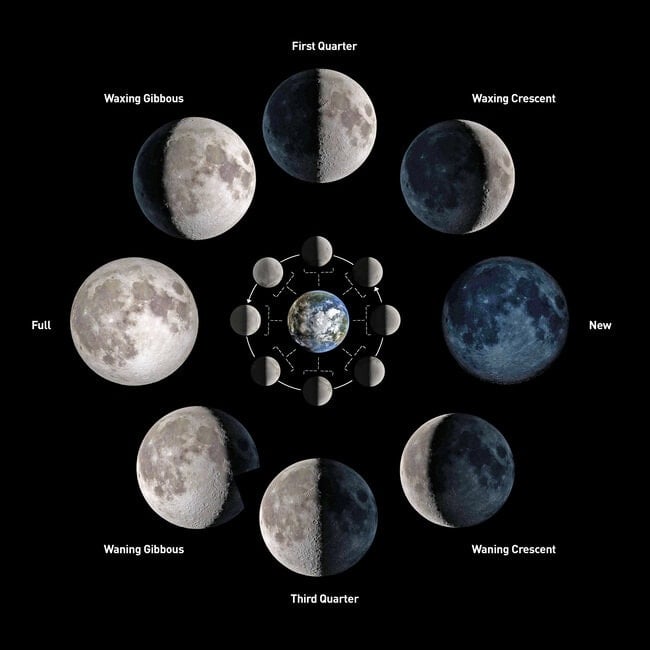
This phase comes about 15 days after the new Moon at the approximate midpoint of the lunar cycle (29.5 days). Technically, it is only considered “full” on one specific day. Before and after that, it is either waxing or waning, respectively, no matter how full it appears to be. If you want to get even more technical, it is only “full” for a brief instant. These are the times listed in our calendars. Learn more about the lunar phases.
Traditional and Alternative Names
Full Moon names have their roots in the traditions of North American Native American tribes. These tribes honored the changing seasons by assigning unique names to each one. Interestingly, these captivating names encapsulated the essence of a whole month in which they appeared.
While there might have been some variations in the names from tribe to tribe, a strong sense of consistency resonated among the different regions. On this rich cultural backdrop, European settlers arrived and embraced the custom, weaving in some of their own versions into the tapestry of time.
Most of the names commonly used in modern American almanacs come from the Algonquian-speaking peoples of the Northeastern Woodlands, with additions from Lakota, Anishinaabe, and Cherokee traditions. The Old Farmer’s Almanac and Farmers’ Almanac have used these names since the 1930s. Many full Moons have multiple traditional names; the Cold Moon, for example, is also called the Long Nights Moon, the Frost Moon, the Oak Moon, and the Moon Before Yule.
- January, Wolf Moon: also Old Moon, Snow Moon (in some tribes), Moon After Yule.
- February, Snow Moon: also Hunger Moon, Storm Moon, Bone Moon.
- March, Worm Moon: also Crow Moon, Sap Moon, Lenten Moon.
- April, Pink Moon: also Sprouting Grass Moon, Egg Moon, Fish Moon, Paschal Moon (when it sets the date for Easter).
- May, Flower Moon: also Corn Planting Moon, Milk Moon, Hare Moon.
- June, Strawberry Moon: also Rose Moon, Honey Moon, Mead Moon.
- July, Buck Moon: also Thunder Moon, Hay Moon.
- August, Sturgeon Moon: also Green Corn Moon, Grain Moon, Red Moon.
- September, Corn Moon / Harvest Moon: the Harvest Moon is whichever full Moon falls closest to the autumn equinox, usually in September but sometimes October.
- October, Hunter’s Moon: also Travel Moon, Dying Grass Moon, Sanguine or Blood Moon.
- November, Beaver Moon: also Frost Moon, Mourning Moon, Moon When the Rivers Begin to Freeze.
- December, Cold Moon: also Long Nights Moon, Oak Moon, Moon Before Yule.
What Is a Supermoon?
A supermoon occurs when the Moon is at least 90% of the way to its perigee position at the same time it is in its “full” or “new” phase. When a new or full Moon happens at the same time as perigee, it is known as an “extreme perigean” supermoon.
A supermoon appears about 7% larger and roughly 15% brighter than an average full Moon, and as much as 14% larger and 30% brighter than a “micromoon” (a full Moon at apogee, the farthest point in its orbit). The difference is real but subtle to the eye unless you compare side-by-side photos. The 2025 calendar above closed with three supermoons in a row: the October Harvest Moon, the November Beaver Moon, and the December Cold Moon.
Blue Moon
If there are two full Moons in one month, the second one is referred to as a “blue.” (Though it is not blue in color.) On average, this happens every two to three years. However, the original definition for a Blue Moon is the following: When four full Moons occur within any given season, the third one is known as Blue.
The phrase “once in a blue Moon” comes from this rarity. The next monthly Blue Moon, by the modern definition, falls on May 31, 2026 at 4:45 a.m. EDT, the second full Moon in May 2026. The Flower Moon arrives on May 1 and the Blue Moon closes the month 30 days later. Mark your calendar; the next one after that is not until 2028.
A Daytime Full Moon?
As mentioned above, even though the Moon may look full to you a few days before or after the exact time we list above, the Moon is only considered to be full for a brief instant. Peak illumination may occur during the day in some parts of the world. The May 1, 2026 Flower Moon, for example, peaks at 1:23 p.m. Eastern Daylight Time, with the Moon already below the horizon for most American observers. By moonrise that evening, the Moon has just begun to wane, but to the unaided eye it still looks completely full.
Any questions? Contact [email protected]
Lunar Effects on Behavior?
While there is no real consensus on how lunar phases affect our moods and physical well-being, there are plenty of studies and real-life experiences that blame it for everything from increased crime and injuries to lack of sleep. What do you believe? (Share your experience in the comments below.)
People often find when they align their energies with the specific lunar phases, they feel more inspired and productive. Tuning into nature and the environment around us has been shown to help us understand ourselves on a deeper level. This is why many people engage in monthly routines for self-care to get in alignment with the cycles of nature in order to gain perspective and reconnect with themselves.
Does the Moon Affect Fishing?
Lunar phases do influence fish activity. Similar to deer, fish are most active during the days leading up to and following a full or new Moon. These periods can be particularly fruitful if moonrise or moonset align with sunrise or sunset.
Saltwater fish are particularly susceptible to the lunar phases, which cause unusually high and low tides. Higher tides may lure fish into new hunting areas, mainly if they coincide with the spawning of prey fish that can be easily traced. Conversely, lower tides might concentrate fish in locations not frequented during average water levels.
Gardening by the Full Moon
The Almanac’s Gardening by the Moon tradition ties planting to lunar phases. The two-week stretch from new Moon to full Moon, when the Moon is waxing and gravitational pull is increasing, is favored for planting above-ground crops (leafy greens, beans, tomatoes, squash). The two weeks from full Moon to new Moon, when the Moon is waning, is favored for root crops (carrots, potatoes, onions) and for pruning. The full Moon itself is traditionally a “rest day,” used for harvesting and seed saving rather than planting.

What About the Other Lunar Phases?
While full Moons often garner the most attention, the other lunar phases are equally intriguing. The full cycle has eight named phases: new Moon, waxing crescent, first quarter, waxing gibbous, full Moon, waning gibbous, last quarter, and waning crescent. The new Moon is the one that remains invisible to us, since it sits between the Earth and the Sun. Waxing means the lit portion is growing each night. Waning means it is shrinking. See the full lunar-phase calendar with diagrams.

Frequently Asked Questions
When is the next full Moon?
The Flower Moon peaks on May 1, 2026 at 1:23 p.m. EDT. The next one after that is the Blue Moon on May 31, 2026 at 4:45 a.m. EDT, the second full Moon of May 2026. See the table above for every full Moon of 2026.
Why does the full Moon have a name like “Wolf” or “Worm”?
The names trace back to Native American tribes, especially Algonquian-speaking peoples of the Northeast, who tagged each month’s full Moon to the season’s natural events: wolves howling in January, worms surfacing as the ground thawed in March, sturgeon running in August. European settlers adopted the custom and almanacs have published the names since the 1930s.
What is a Blue Moon?
By the modern definition, a Blue Moon is the second full Moon in a calendar month. The original definition is the third full Moon in a season that has four. May 31, 2026 is the next Blue Moon by the monthly definition.
What is a supermoon?
A supermoon is a full or new Moon that occurs when the Moon is at least 90 percent of the way to perigee, its closest approach to Earth. It looks about 7 percent larger and 15 percent brighter than an average full Moon. 2025 ended with three in a row: October, November, and December.
How many full Moons are in a year?
Most years have 12 full Moons. Years with a Blue Moon, like 2026, have 13. The lunar cycle is 29.5 days, so over time the extra days add up to one extra full Moon roughly every 2.7 years.
Does the full Moon affect sleep?
Some studies have found small but real effects: people tend to fall asleep slightly later and sleep slightly less around the full Moon. The cause is debated. The brighter sky is one candidate, although the effect persists in light-controlled experiments.
Why are the times listed in Eastern Time?
The Farmers’ Almanac is headquartered in Lewiston, Maine, and our calendars list times in Eastern Standard Time, switching to Eastern Daylight Time during daylight saving. To convert: subtract 1 hour for Central, 2 for Mountain, 3 for Pacific, and 5 for Hawaii. The exact moment of full Moon is the same worldwide; only the local clock changes.
Join the Discussion!
Do you have a favorite name from our Full Moon Calendar here?
What are some things you do to celebrate the Moon?
Share your photos in the comments below!
September’s full Moon is the one most people know by name. Read the full guide to the Harvest Moon 2026, including why it rises so close to sunset for several nights running, and what that meant before tractors had headlights.
2026 Full Moon Calendar: Every Date, Time, and the Story Behind the Name
In 2026, there are 13 full moons — an extra moon squeezed into the calendar year because the 29.5-day lunar cycle runs slightly shorter than most calendar months. The 13th moon falls on May 31, making it a Blue Moon. All times below are Eastern Time (ET); subtract 1 hour for Central, 2 for Mountain, 3 for Pacific.
| Date | Time (ET) | Name | Also Known As | Story Behind the Name |
|---|---|---|---|---|
| January 3 | 5:03 AM | Wolf Moon | Old Moon, Moon After Yule, Ice Moon | Named for the howling of wolves that echoed through winter villages at night. When food was scarce and packs pressed close to settlements, the sound of wolves defined January nights across the northeastern woodlands. |
| February 1 | 5:09 PM | Snow Moon | Hunger Moon, Storm Moon, Bone Moon | February historically brought the heaviest snowfall across the Northeast and Great Lakes. “Hunger Moon” reflects how depleted winter food stores became by mid-February — the toughest month for both people and wildlife. |
| March 3 | 6:38 AM | Worm Moon | Crow Moon, Sap Moon, Lenten Moon, Sugar Moon | As March ground thaws, earthworms surface and robins return to feed — signs of spring’s first stirring. The Ojibwe called it the Sugar Moon, marking maple sugaring season. Note: a total lunar eclipse accompanies this full moon, visible from North America. |
| April 1 | 10:12 PM | Pink Moon | Sprouting Grass Moon, Egg Moon, Fish Moon, Paschal Moon | Named not for the color of the moon but for wild ground phlox (Phlox subulata), one of the first wildflowers of spring, which blooms in pink masses across eastern North America in April. When it falls near Easter, it becomes the Paschal Moon. |
| May 1 | 1:23 PM | Flower Moon | Corn Planting Moon, Milk Moon, Hare Moon | May’s explosion of blooms across the continent gave this moon its most common name. The Algonquian Corn Planting Moon marked the traditional safe time to plant after the last frost — a calendar built on lunar cycles rather than calendar dates. |
| May 31 | 4:45 AM | Blue Moon | Second full moon of May | A Blue Moon is the second full moon in a single calendar month, occurring roughly every two to three years. The phrase “once in a blue moon” entered the English language centuries before the modern definition was settled. In 2026, May is the month with two. |
| June 29 | 7:57 PM | Strawberry Moon | Rose Moon, Honey Moon, Mead Moon | The Algonquian name captured the short strawberry harvesting season of June. European settlers called it the Rose Moon for the roses in bloom. “Honey Moon” referred both to the warm honey-colored light this low moon casts near the horizon and to the tradition of mead-making from the honey harvest. |
| July 29 | 10:36 AM | Buck Moon | Thunder Moon, Hay Moon, Antler Moon | July is when white-tailed deer bucks begin growing their new antlers, visible as velvety nubs. “Thunder Moon” reflects July’s frequent afternoon thunderstorms across much of the continent — the month with the most lightning in the eastern US. |
| August 28 | 12:18 AM | Sturgeon Moon | Green Corn Moon, Grain Moon, Red Moon, Dispute Moon | Great Lakes and Lake Champlain tribes named this moon for the giant lake sturgeon, most easily speared from bark canoes in August when the fish ran in greatest numbers. The sturgeon, which can live 150 years and exceed 300 pounds, was a critical summer food source. |
| September 26 | 12:49 PM | Harvest Moon | Corn Moon, Barley Moon | The Harvest Moon is not always September’s full moon — it is whichever full moon falls closest to the autumn equinox, which can occasionally fall in October. In 2026, September 26 wins by weeks. Before electric light, farmers used its bright, low-angled light to work fields late into the evening during the critical harvest window. |
| October 26 | 12:12 AM | Hunter’s Moon | Travel Moon, Dying Grass Moon, Blood Moon, Sanguine Moon | After the Harvest Moon cleared the fields, hunters could spot deer and other game fattened on fallen grain against the bare, frostbitten landscape. The Hunter’s Moon rises at nearly the same time for several nights in a row — a quirk of orbital geometry that extends the bright hunting window. |
| November 24 | 9:53 AM | Beaver Moon | Frost Moon, Mourning Moon, Moon When the Rivers Begin to Freeze | November was the month to set beaver traps before rivers iced over, securing furs for the winter ahead. Beavers themselves are most active in November, working furiously to cache food under the ice before freeze-up seals their ponds. |
| December 23 | 8:28 PM | Cold Moon | Long Nights Moon, Oak Moon, Moon Before Yule, Frost Moon | December’s full moon rises during the longest nights of the year, hanging in the sky far longer than summer moons. “Long Nights Moon” is the most descriptive: December nights are 15 to 16 hours long across northern states, giving this moon ample time to dominate the winter sky. |
To find the full moon time in your time zone, use our 2026 Moon Phases Calendar, which lists every phase to the minute in Eastern, Central, Mountain, and Pacific time. For the best nights to plant by the moon, see our Gardening by the Moon Calendar.

My wife is epileptic and has oncet dementia, and has been getting chemo treatment as maintenance. I am beginning to recognize a pattern either a day before, on or 2 maybe 3 days after the full moon she will have a seizure and her sundowning occurs.
What is your theory on this?
I don know . . . What’s yours . . .
Thank you for this information. However I have been reading several other things and they are all stating that there are going to be 2 Full Moons in April of 2026. They will happen on April 1 and on April 30. Are yall not recognizing the second full moon for April 2026? Thanks! Have a great week everyone while enjoying this fall weather with leaves changing beautiful colors and falling onto the ground…make the ground colorful and arrange the leafs into a design! Let’s make our ground beneath us as beautiful as our sky is without being told to pick up trash and recycle and etc! Much love from Western Ky!
Hi Tala, Our 2026 Full Moon Calendar is correct; April 2026 will only have one full Moon, but May 2026 will have two full Moons. Please feel free to share with us links to the resources you are seeing online via this form: https://www.farmersalmanac.com/contact/general-comments-questions-feedback. We appreciate your question, and hope that you enjoy autumn in beautiful Kentucky!
When is the “Hunters’ Moon” for 2025?
Hi Dave, The full Moon tonight (October 6, 2025) is the Harvest Moon and also the Hunter’s Moon. Are you a hunter, or what makes you curious about the name? Let us know so that we can share more information with you. Thanks for your question!
I read in another reference if Beaver Moon is disappear due to Full Moon after Harvest Moon should be Hunter’s Moon. Would you like to elaborate it?
what is the meaning of a corn moon and what is a corn moon
Hi Melanie, Many American Indian tribes named the September full Moon in honor of the corn harvest. The Abenaki of the Northeast United States refer to September’s Moon as the “Corn Maker Moon.” The Pueblo and Zuni of the Southwest call it “Moon When the Corn is Taken In” and “Corn is Harvested Moon,” respectively. Please let us know if you have any other questions!
Corn Moon often interchangeable with Harvest Moon when fall in September, but sometimes Harvest Moon fall in October, also Hunter’s Moon. By definition, Beaver Moon still exist. How about some references mention if Hunter’s Moon should fall after Harvest Moon, thus if Corn Moon split up into Harvest Moon, Beaver Moon disappear?
My shot of tonight’s Flower Moon from Lewisville, Tx…
This is a stunning picture, Karl! You’re a great photographer. Thanks for sharing with us.
October 17, 2024 Hunter’s Moon from Louisiana
I need help. Is anyone awake right now? I’m going through a very strange time. I need a kind, and nice, and calm human to help me. I believe that I am Instinctually synchronising with the moon.
It is 6:24 am, and I have to stop. 🛑
Just need to know is the moon right now a new moon? 🌑
October 2 was the Hunter’s New Moon. We hope you are able to find sleep.
I love you
No
I’m sorry if I had seen this i would have helped you! I just want to give you major major props for reaching out for someone! I wish I had that strength as I’m sure many of us wish. I can’t imagine what or how your life was a year ago and im sure you never thought your comment would give others strength but Thank you for this! I wish you all the best! Much love from Western Ky!
Yes, I am a nurse and can attest to the full moon effects on our health and behaviors. I’m sure my nursing colleagues out there will agree with me. 🌝
Hi Pt. Pleasant Beach N.J. September 13, 2024 at 7:30 A.M. Sun rising through the clouds and to the right ? Interesting
I do love full moons , even though I find I get very restless. Can’t sleep .sometimes I can get moody depending on the phase of the moon